Free shipping on orders over 50€ up to 500g
French Online shop for beads and accessories for the creation of DIY jewellery and other creative hobbies

Log-in

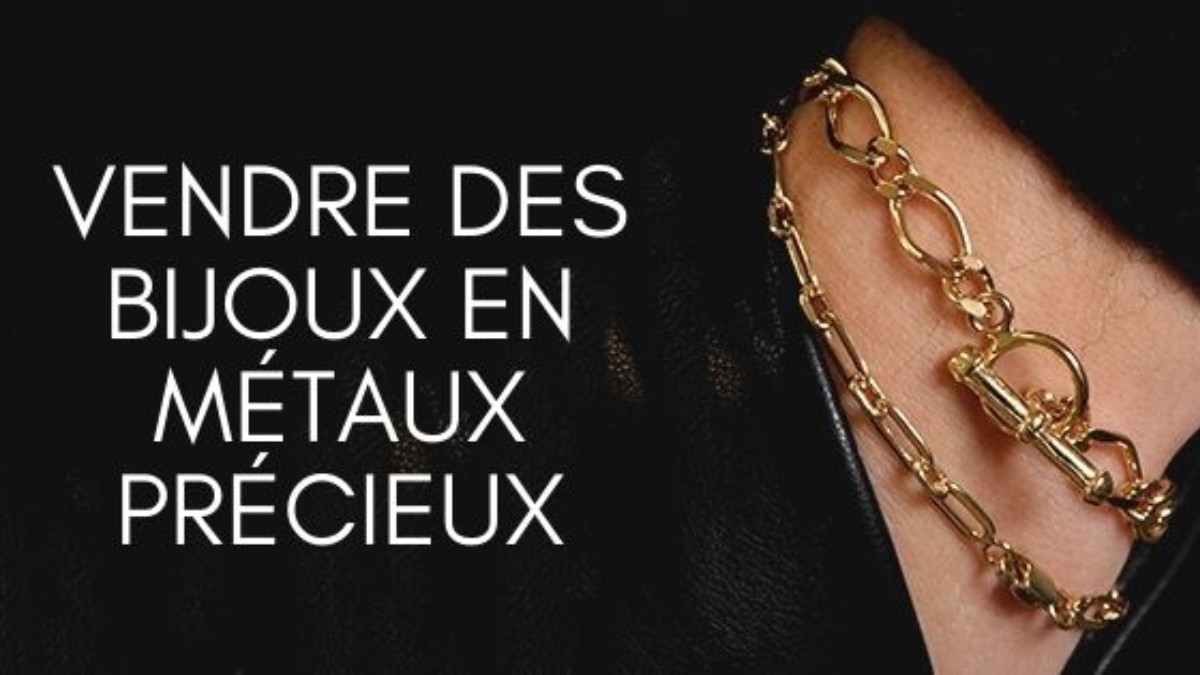
Obligations for the sale of precious metal jewelry

Made by :Laurence T Perles&Co
Published on the :05/02/2021
Obligations for the sale of precious metal jewelry

Is selling your precious metal creations one of your resolutions for 2023? Congratulations!

But be aware that creating DIY costume jewelry may be subject to legal obligations.
In France, this professional activity is reserved for craftsmen. That's why it's subject to very precise legislation. These legal obligations apply to both new and second-hand products.

Even if you only intend to use 925 Sterling Silver primers, i.e. to do onlyassembly, you must comply with these regulations. The same applies to Gold Plating, Platinum Plating, Silver Plating, Vermeil creations and Gold Filled (except for hallmarks).

So, to be sure that your project is covered by all this, it's best to check with the customs guarantee office near your workshop. You'll find all the information you need on the precious metals file compiled by the Customs Department.

To help you, we've summarized the various legal obligations you'll have to meet in the course of your new professional activity.

CAUTION: THIS ARTICLE IS FOR INFORMATION PURPOSES ONLY. FOR MORE DETAILED INFORMATION, PLEASE CONTACT YOUR LOCAL CUSTOMS OFFICE, TAX OFFICE, CHAMBER OF TRADE AND CRAFTS OR CHAMBER OF COMMERCE.

Declaration of existence

This is simply the declaration that states that you are starting a business involving the holding of precious metals such as gold, silver or platinum.
This is done before you even start trading, at the customs guarantee office responsible for the department in which your business is located.

When you make your declaration, you will be asked to provide a number of supporting documents:

  • Your identity and status.

  • Your company identity card.
    If you're a craftsman, you'll need to obtain your company's registration certificate from the Chambre des Métiers et de l'Artisanat.
    For commercial companies, you'll need a K extract (for individuals) or Kbis extract (for legal entities). This extract, issued by the Commercial Court, certifies the registration of a commercial company with the Trade and Companies Register (RCS).

Finally, it's best to have your own business premises, either leased or owned. In these premises, you must hold all precious metals, stocks, work in progress and entrusted work. All documents (declaration of existence, police book, purchase invoice, etc.) must be available for immediate consultation in the event of a Customs inspection.
However, in some regions, you are allowed to set up your workshop in a part of your house, such as a garage or a room with an independent entrance.

Contact the warranty office closest to your workshop to find out all the formalities.

Finally, you may be exempt from business property tax if you meet certain criteria. To find out if you qualify, contact your local tax office.

Hallmarks

Each creation, whether in gold, silver or platinum, can have two hallmarks:

  • The diamond-shaped master hallmark (maker's hallmark) or the oval-shaped responsibility hallmark (importer's hallmark). Each hallmark is unique and identifies its owner. It features the owner's initials and his or her own identifiable symbol.
    How do I obtain a master hallmark? To obtain a hallmark, the professional must be known to the guarantee office and have filed a declaration of existence.

  • The work title hallmark, also known as the title or guarantee hallmark. It is generally affixed by warranty offices, as craftsmen rarely have the authorization to do so.

According to regulations, certain items are exempt from the warranty hallmark. This is the case for jewelry that is too thin or fragile to bear the hallmark, jewelry made before 1838 and later jewellery that has an old French hallmark of guarantee.
This is also the case for jewelry from the European Economic Area or Turkey, already bearing a registered maker's hallmark or responsibility hallmark, and a registered title hallmark.
This is also the case for gold or platinum jewelry weighing less than 3 g, and silver jewelry weighing less than 30 g. Please note: in some regions, the total weight of the jewel is taken into account; in others, only the weight of the precious metal is taken into account.

Certain items that are too delicate or fragile may also be exempt from the hallmark. The customs guarantee office must authorize this exemption.

What are the hallmarks in force in France for precious metals? Find out in our practical information sheet.

Keeping a police book

What is a police book? The livre de police is a mandatory register for anyone working with precious metals. It ensures the traceability of precious metal items, listing purchases, sales, receipts and deliveries of gold, silver and platinum, whether processed or not.

The manufacturer must also mention the name and address of the supplier or persons having entrusted a work, the nature, the number, the weight, the title (i.e. the percentage of Gold or Silver in the metal), the origin of the products, their dates of entry and exit.

This can be done on paper, in an accounting book or electronically. Contact your local guarantee office to find out which is most suitable.

The register must be signed and stamped by the police station or town hall where your workshop is located, even before you write the first line. It must then be kept for six years from the date of the last operation recorded, either at the place where you work or at the place where your products are stored.

Please note: Weighing cannot be done with just any scales. You must use an approved scale. This scale must be checked every year by an approved organization.

Please note: if you need to change any information in the police book, the correction must be visible. It is therefore forbidden to use a blanco or liquid corrector. If you make a mistake during entry, cross out the line and enter a new one, justifying the change.

HBJOAT tax

This tax is payable by anyone who manufactures or retails watchmaking, jewelry, goldsmithing and tableware products. So, if you sell your DIY jewelry creations containing precious metals, you may be subject to this tax.

This tax amounts to 0.19% of pre-tax sales, and must be declared and paid to Francéclat, the Comité professionnel de développement de l'horlogerie, de la bijouterie, de la joaillerie, de l'orfèvrerie et des arts de la table. Depending on the amount, the HBJOAT tax is paid monthly, quarterly or once a year.

Please note: companies whose HBJOAT amounts to €20 or less are exempt from payment. However, they must declare the amount of HBJOAT online.

To find out more about the HBJOAT tax, visit the Francéclat website.

Share with my friends
Your questions (29)
You have a question about this sheet? Ask our team and the people who have already tested it. The Perles & Co community is here to help!
By Gwenaelle (16/11/2025 21:07:07)
Bonjour , j ai acheté uniquement chez vous des apprêts , chaînes, breloques , anneau de montage en laiton , acier inoxydable ou encore zamac , certains ont une dorure a l'or fin et d'autre une galvanisation a l argent 5 micron ou moins ?
Suis je tenu a faire une déclaration d'existence ? ( Je suis en micro )
( Ps je tiens un tableau à jour de la composition de mes métaux avec leur certificat reach )
Merci beaucoup de votre réponse
Translate the question
Please log in to use this feature
Our Lucie expert answers you (17/11/2025 09:27:25)
Bonjour, ces matériaux : acier, zamac, laiton doré à l'or fin (moins de 3 microns) et placage argent fin (moins de 10 microns) ne sont pas considérés comme des métaux précieux, donc aucune déclaration d'existence n'est requise auprès des Douanes y compris en micro entreprise.
Translate the answer
Our Lucie expert answers you (18/11/2025 16:39:47)
Bonjour,
Non, en effet, aucune déclaration n’est nécessaire. Je vous conseille toutefois de contacter le bureau des douanes le plus proche afin d’obtenir une confirmation et d’être pleinement rassurée.
Translate the answer
Answer from customer Gwenaelle H. (17/11/2025 19:00:34)
Merci de votre réponse , donc pour résumé et me rassurer les métaux doré à l'or si en dessous de 3 micron et le placage argent vieilli /999 utilise a 5 micron de placage je n' ai pas de déclaration d'existence a faire aux douanes ?
Translate the answer
Our Lucie expert answers you (17/11/2025 15:41:30)
Bonjour, oui c'est bon aussi. On peut utiliser l'appellation "Plaqué Argent" lorsqu'il y a 10 microns. Ici ce n'est pas le cas.
Translate the answer
Answer from customer Gwenaelle H. (17/11/2025 11:49:19)
Merci de votre réponse, j ai certaines breloques en métal zamac ou autre qui sont galvanisé argent vieilli argent 999 a 5 microns c est bon aussi du coup ?
Translate the answer
By Valérie (11/09/2025 00:30:40)
Bonsoir,
Pour la Déclaration d'existence, doit on la faire sur papier libre ou existe t-il un formulaire? Si Oui ou se le procurer.
Pour le livre de police, y en t'il un à privilégier ?
Merci.
Bonne soiree.
Translate the question
Please log in to use this feature
Our Lucie expert answers you (12/09/2025 10:54:33)
Bonjour, je vous conseille de contacter le bureau de garantie le plus proche de votre atelier pour connaître toutes les formalités. Concernant le livre de police, il n’existe pas de modèle unique imposé par l’administration, mais il doit respecter un certain formalisme : pages numérotées, sans rature ni blanc, et mentionnant toutes les informations obligatoires (origine, description précise, identité de l’acheteur/vendeur, etc.). Vous pouvez l’acheter en papeterie spécialisée, chez des fournisseurs de matériel professionnel ou même sous forme informatisée si le logiciel est homologué. 
Translate the answer
By Annick (24/06/2025 17:46:06)
Boni, j'ai bien compris que les apprêts, créoles en acier inoxydable ne sont pas soumis à la taxe HBJOAT mais qu'en est il de ceux en acier inoxydable doré à l'or fin . En vous remerciant
Translate the question
Please log in to use this feature
Our Laurence expert answers you (30/06/2025 16:20:43)
Bonjour,
L'acier inoxydable doré à l'or fin n'est pas considéré comme un métal précieux.
Qu'il soit brut ou doré à l'or fin, il n'est pas soumis à cette taxe.
Toutes les informations sont disponibles sur cette page : https://www.teletaxe.fr/presentation.html

Translate the answer
By Nicolas (14/06/2025 09:06:16)
Bonjour je souhaiterais revendre en ambulant des bijoux en argent 925000 ( moins de 5 grammes )et Ambre
Achetés chez un grossiste
Suis je concerné par le bureau des garanties, livré de police, taxe? etc
Merci!
Translate the question
Please log in to use this feature
Our Lucie expert answers you (20/06/2025 10:31:30)
Bonjour, oui, vous êtes concernée par plusieurs obligations comme la tenue d’un livre de police, certaines taxes spécifiques liées aux métaux précieux,... Nous attirons toutefois votre attention sur le fait que ces informations sont données à titre purement informatif. Pour des réponses précises et adaptées à votre situation, nous vous recommandons vivement de prendre contact avec : le service des douanes, les impôts, la Chambre des Métiers et de l’Artisanat ou la Chambre de Commerce du lieu où vous exercez votre activité professionnelle.
Ils pourront vous guider sur les démarches exactes à effectuer en fonction de votre statut et de votre activité. Merci
Translate the answer
By nini (05/05/2025 12:22:33)
Bonjour, est ce que l'assemblage de bijoux fantaisie (ajout de charms, perles etc) est considéré comme fabriquant ou détaillant ? Comme sur la fiche de Francéclat précise que la taxe n'est destinée qu'aux fabricants. Merci
Translate the question
Please log in to use this feature
Our Lucie expert answers you (07/05/2025 08:45:06)
Bonjour, effectivement, la taxe HBJOAT concerne uniquement les fabricants, c’est-à-dire les personnes qui créent ou transforment des bijoux fantaisie et les vendent à des professionnels (boutiques, revendeurs, grossistes, etc.). Cela inclut les artisans créateurs, y compris ceux ayant le statut d’autoentrepreneur.
En revanche, les ventes directes aux particuliers (sur internet, en foire, en marché, à domicile ou en comité d’entreprise) sont exonérées, même s’il s’agit de bijoux que vous assemblez vous-même avec des charms, des perles ou d'autres éléments.

La fiche de Francéclat est claire : toutes les ventes au détail de bijoux fantaisie, quel que soit l’opérateur ou le canal de distribution, ne sont pas concernées par cette taxe. Seules les ventes à des professionnels sont taxables, à condition que le chiffre d’affaires lié dépasse 10 000 € HT par an (auquel cas la taxe dépasse 20 € et devient exigible). À noter : les bijoux en métaux précieux (or, argent, platine, plaqué or), avec ou sans pierres ou perles, sont toujours soumis à la taxe, même en vente au détail.
Si vous vendez uniquement à des particuliers et que vos bijoux sont fabriqués avec des métaux non précieux, sans pierres, alors vous n’êtes pas soumis à la taxe HBJOAT pour les bijoux fantaisie que vous assemblez.


https://www.teletaxe.fr/media/pdf/La_taxe_HBJOAT_en_7_questions_pratiques.pdf sur la page 3, il est bien écrit que "les ventes au détail de bijoux fantaisie ne sont pas taxables" quels que soient l'origine des produits et le point de vente concerné.

https://lespiesbavardes.com/les-obligations-legales-pour-vendre-tes-creations-de-metaux-precieux-et-pierres-fines/

Je tiens tout de même à préciser que notre article est un texte purement informatif. Il vaut mieux que vous vous renseigniez directement auprès des douanes, des impôts ou de la chambre des métiers de l'artisanat du département dans lequel votre activité est enregistrée.
Perles & Co n'est ni avocat ni juriste et n'est pas tenu responsable de l'utilisation des informations si elles s'avèrent inappropriées à son cas.
Translate the answer
Your reviews (1)
Notices subject to control
4/5
Average Grades
Please log in to use this feature
By Cathy (posted on : 14/04/2021 )
Bonjour,

Merci pour le récapitulatif, cela s'applique aussi pour les bijoux plaqués (or, argent, platine) ?
Je ne trouve pas l'information sur le site des douanes ou impot gouv, où ils ne parlent que des métaux précieux.
Sachant que le gold filled contient plus d'or, pourquoi cela ne s'applique pas à ce dernier ?
Merci.
Translate the notice
Our Perles & Co expert answers you (27/04/2021 16:20:08)
Les douanes précisent : "les ouvrages en métaux précieux (composés d'or, d'argent ou de platine)..." Cela inclut donc les bijoux plaqués et le gold filled. Site des douanes : https://www.douane.gouv.fr/professionnels/autres-demarches/metaux-precieux

Pour le Gold Filled, nous savons aujourd'hui qu'il est nécessaire de faire une déclaration d'existence et de tenir un livre de police.

Pour avoir plus de précision, nous vous conseillons de vous rapprocher du bureau de garantie du service des douanes proche du lieu de votre activité.
Translate the answer

Credits

Perles & Co, Internet & E-Commerce company [05/02/2021] Any reproduction, representation, adaptation, in any form whatsoever, even partial, is prohibited, except for reproduction for private use not intended for collective use, representation in the family circle (art. L 122-5 CPI) and online publishing on condition that the source is mentioned and a link is included to the corresponding page of our site www.perlesandco.com.